
In our partnership with WWF, we analyze and manage the international sourcing of defined raw materials. Our focus is on systematically building traceable, deforestation-free, and conversion-free supply chains. The following goals apply to our private-label products (standard and promotional assortments) in all Lidl countries where the international partnership with WWF is active.
We are committed to sourcing high-risk raw materials - such as soy, palm oil, cocoa, coffee, beef, wood, cellulose, and paper - from deforestation- and conversion-free supply chains and actively manage our raw material strategy to address risks for our private-label products. This approach consistently implements the requirements of the upcoming EU Deforestation Regulation and aligns with the Accountability Framework Initiative (AFI). We and our suppliers work according to the binding requirements and cut-off dates of the AFI and the EU Deforestation Regulation.* This applies to the high-risk raw materials soy, palm oil, cocoa, coffee, beef, wood, pulp, and paper.
* Each standard defines a cut-off date, marking the point after which deforestation for growing raw materials is prohibited at a specific location. These dates vary between standards.
We require all existing and new suppliers to adopt a policy by the end of the 2026 financial year ensuring that their operations are free from deforestation, land conversion, and exploitation.
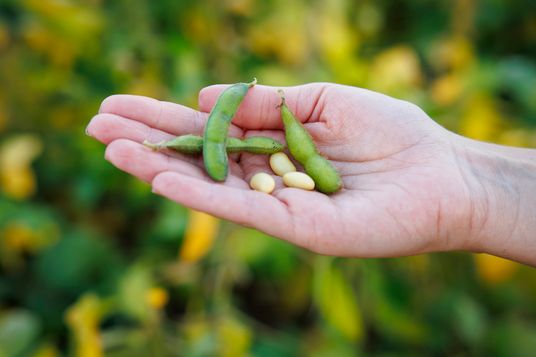
As part of the partnership, we are committed to creating fully traceable soy supply chains that are free from deforestation, conversion, and exploitation. To achieve this, we will thoroughly review the origin of the soy used directly in our supply chain (alternative proteins and soy products) as well as in the feed of selected animal products such as chicken, eggs, and pork. This analysis will help us identify areas for action. Furthermore, we will collaborate with the Collaboration for Forests and Agriculture (CFA) to assess and address issues related to deforestation, land conversion, and exploitation within our own soy supply chains. Our long-term goal is to ensure that our soy supply chains are fully traceable and free from deforestation, conversion, and exploitation.
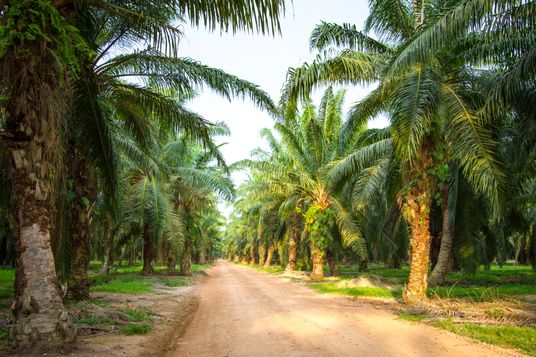
Since the beginning of the 2025 financial year, we source only traceable palm and palm kernel oil that is free from deforestation, land conversion, and exploitation. To ensure this, 100% of our palm and palm kernel oil used in food and non-food products must comply with the "RSPO Segregated" or "EU Organic" standards. Furthermore, 100% of derivatives should at least comply with the "RSPO Mass Balance" standard, and we commit to working towards segregation.*
We are working towards sourcing traceable, deforestation-, conversion-, and exploitation-free paper and pulp products on an international level. To this end, we will analyze the quality and origin of paper and pulp products. This analysis will help us develop a comprehensive long-term strategy to ensure that our paper and pulp products are fully traceable. This includes pulp and paper in our private-label products, their labels, and packaging in all Lidl countries where the WWF partnership applies. Accepted standards are FSC, FSC Mix, Recycling, and, in exceptional cases, PEFC.
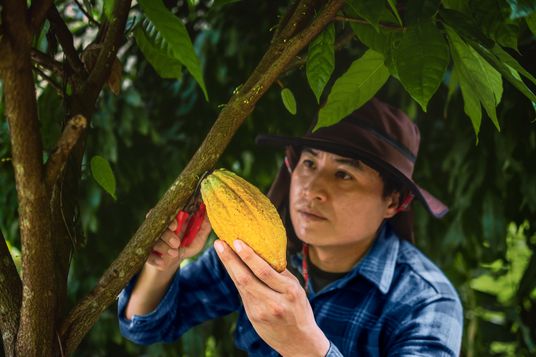
We aim for the full traceability of our cocoa. To achieve this, we are gradually increasing the share of independently certified raw materials in our private labels to 100%. EU Organic, Rainforest Alliance, or Fairtrade are accepted as minimum standards.
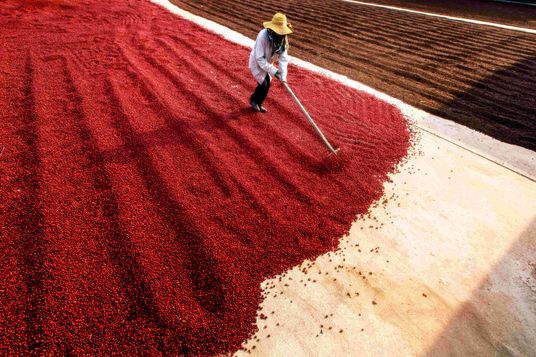
By the end of the 2028 financial year, we will transition all private-label coffee products (including capsules, instant coffee, and cappuccino) to recognized certifications. We accept EU Organic, Rainforest Alliance, or Fairtrade as minimum standards. In addition, we are continuously increasing the share of certified roasted coffee to 100%.*
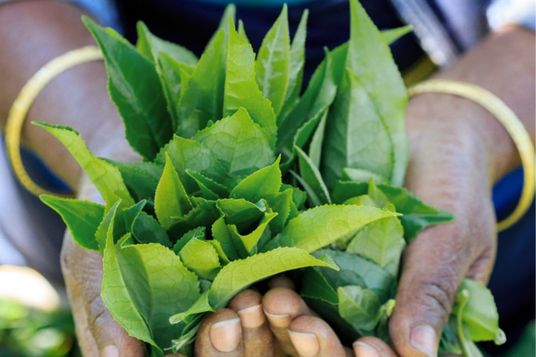
Our assortment of private-label black, green, and rooibos teas will be transitioned to certified raw materials meeting the EU Organic, Rainforest Alliance, or Fairtrade standards in the participating countries. *
*Certification figures refer to the 2024 financial year