

Banana harvesting is physically demanding work, often carried out under challenging conditions. Yet in many places, it is still not fairly compensated. With a comprehensive project across four countries, we are helping to ensure that more than 20,000 workers in the banana sector receive a living wage – a strong commitment to fairness in the supply chain and a model with the potential to drive change across the entire industry.
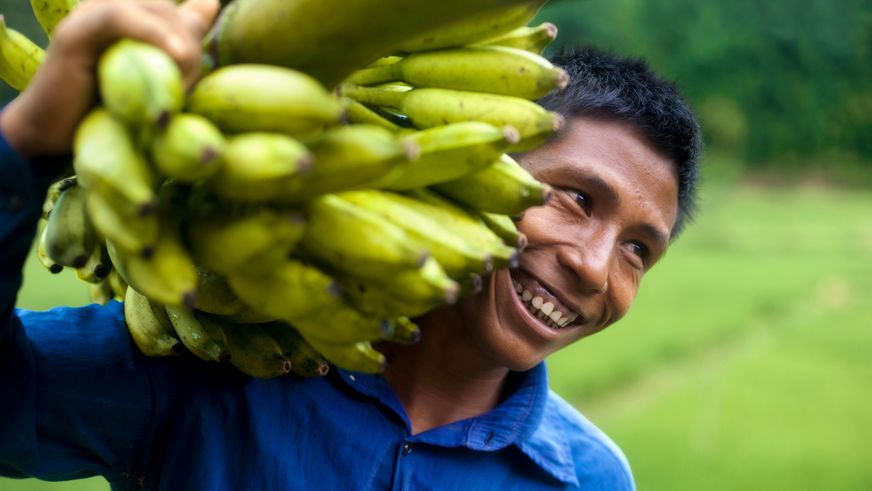
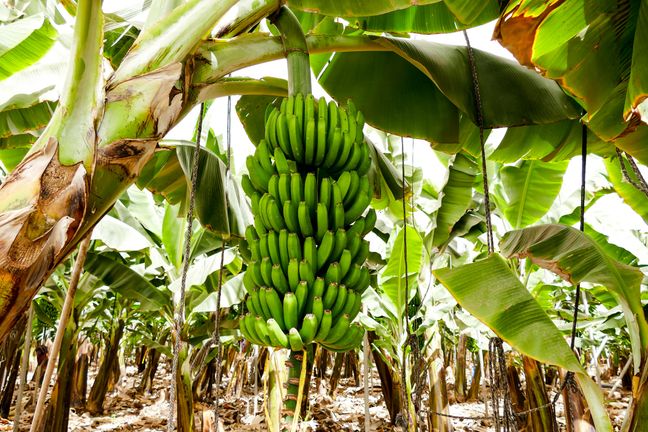
Banana harvesting is physically demanding and largely manual work. The working day often begins in the early morning hours. First, the heavy banana bunches are cut from the plant using machetes and carried by harvest workers to the nearest cableway station. From there, the fruit is transported to the packing station, where it is sorted, washed, weighed and prepared for export. Work is typically done six days a week – often under significant physical strain, in changing weather conditions and frequently for wages that are barely sufficient to live on.
In many producing countries, underpayment is a structural issue in the banana sector. Although bananas are among the most popular fruits worldwide, many workers in growing regions do not earn enough to secure their livelihoods. As a result, families live below the poverty line, children are often required to contribute to the household income, and occupational safety remains limited. Rural regions are particularly affected – around 80% of people living there are at risk of extreme poverty, two-thirds of whom work in agriculture (SDG Report 2019).
"Anyone who sells bananas, as Lidl does, bears responsibility for the people who grow them. That is why, together with our suppliers, we are closing Lidl’s share of the living wage gap across multiple Lidl countries – on an ongoing basis, transparently and in collaboration with the entire supply chain."
For Lidl as an international retailer, one thing is clear: new and bold approaches are needed to create greater fairness along the supply chain. In 2022, we therefore launched our own project for living wages in the banana sector. Since then, we have been closing Lidl’s share of the wage gap across our entire banana range in multiple countries. In doing so, we are helping banana plantation workers and their families achieve a decent standard of living. The project was developed in collaboration with the sustainability initiative IDH and the certification body FLOCERT.
The project is based on a standardised cycle that is carried out annually:
The goal is that everyone working in Lidl’s banana supply chain should be able to earn a better living from their work. Because a living wage means more than just a regular income. It provides the foundation for a dignified life: access to education, healthcare, safe housing, sufficient nutrition, mobility, clothing and a degree of financial independence. That is why we are pursuing this path with determination and a clear ambition to drive real change.
We have already closed our share of the wage gap for the entire banana range in Germany, Austria, Switzerland, Belgium and the Netherlands. This applies to all bananas, regardless of organic, Fairtrade or other certifications. As a result, more than 20,000 workers across over 200 plantations in Colombia, Ecuador, Guatemala and the Dominican Republic benefit. And this is just the beginning: additional Lidl countries are also working on living wages in the banana supply chain. In doing so, we are demonstrating that fairer wages in global supply chains are possible when companies are willing to take responsibility.
By promoting living wages, we are taking a clear stand against poverty, against exploitation and in support of the people behind the product. Because true quality begins where bananas are grown, harvested and packed.