Natural resources are becoming increasingly scarce, posing growing challenges for businesses. With the jointly developed holistic circular economy strategy REset Resources of the Schwarz Group companies, we are committed to keeping urgently needed raw materials in circulation, becoming more independent from global supply bottlenecks, and thereby advancing European resource sovereignty.
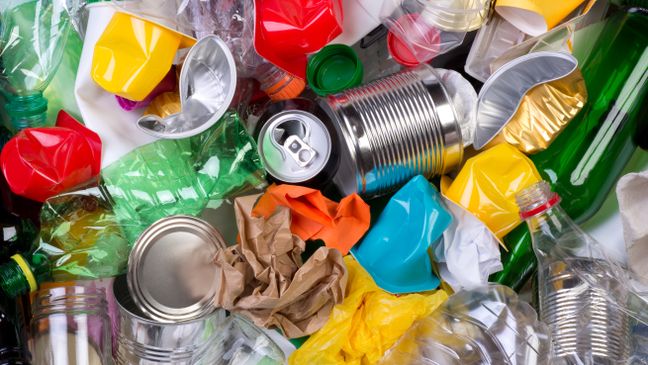
Whether soft drinks or cold cuts, dishwashing liquid or dog food: what ends up in the shopping basket is almost always packaged—and therefore has an impact on the environment and the climate. What matters most is what the packaging is made of and what happens to it after use.
This is exactly where the Schwarz Group companies, including Lidl, come in with their holistic circular economy strategy REset Resources. The goal is to conserve resources and consistently keep packaging in circulation: reduce materials, promote reuse, improve recyclability, secure access to valuable materials, and increase the use of recycled content.
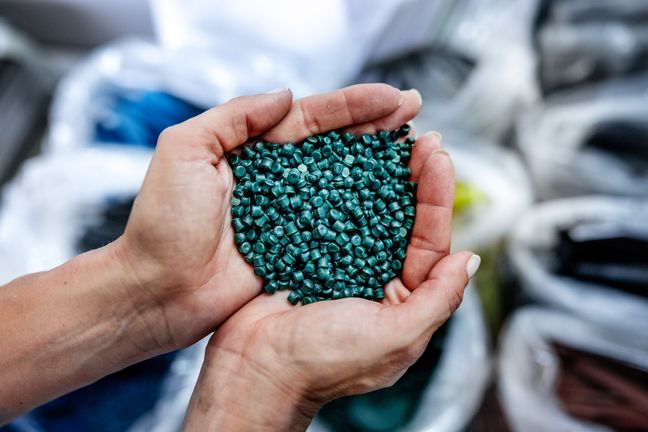
A product everyone knows shows what this can look like in practice: the single-use PET bottle. Every returned bottle helps keep valuable material in circulation and close the PET loop as much as possible. Since 2021, all PET single-use bottle bodies produced by Schwarz Produktion for Lidl and Kaufland own brands in Germany have been made from 100% recycled plastic. The recyclate is processed into granulate and then turned into new bottle bodies. In the 2024 financial year alone, the Schwarz Group companies saved around 65,000 tonnes of virgin plastic and 109,000 tonnes of CO₂. Valuable resources remain in circulation—and the environment is relieved.
In Germany, the Schwarz Group companies cover every step of the PET bottle cycle: collection via deposit machines in stores, sorting, recycling, the production of new bottles, and filling by Schwarz Produktion—before finally returning to shelves at Lidl or Kaufland.
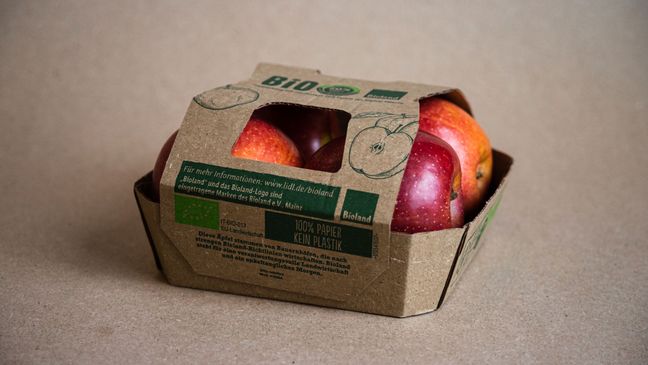
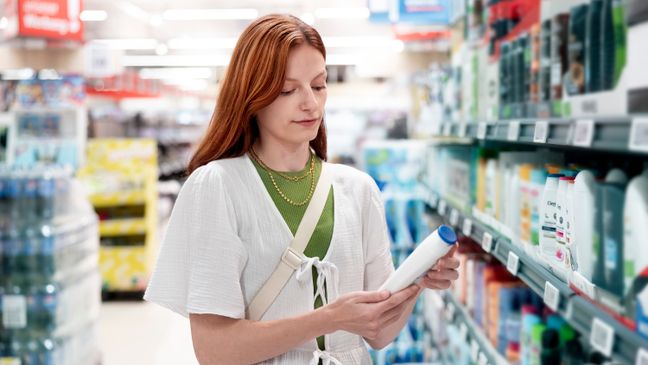
In addition to beverage bottles, Lidl is also working in many other areas to improve packaging and conserve resources. Three examples from the assortment show how specific changes can have a major impact: For Bioland soup vegetables, the plastic tray has been replaced with paper packaging. This saves around 12 grams of plastic per pack. Calculated over a year, this adds up to around 55 tonnes less plastic. For the six-pack of Freeway lemonade (0.33 liters), the previous plastic packaging has been replaced with cardboard. This means the packaging is now completely plastic-free. And for Formil universal and color detergent, the bottle is now made from 100 percent recycled HDPE – a robust plastic commonly used for detergent and cleaning product bottles. This saves 63 grams of virgin material* per bottle. In total, this corresponds to an annual reduction of around 264 tonnes of plastic.
These examples show: even small changes to packaging can have a big impact – especially for products that are sold millions of times every day. Every unit of packaging saved helps to conserve resources and keep materials in circulation.
For us, REset Resources does not just mean using fewer resources, but also taking a clear stance. Together with the other Schwarz Group companies, we take on a role model function and advocate for a fundamental shift in awareness. This includes making transparent what is contained in our packaging. Because conscious consumption begins in the shopping basket. Step by step, we are therefore reducing unnecessary outer packaging and packaging overall and clearly labeling our packaging so that our customers can separate it as effectively as possible and return it to the cycle.
"We design packaging in a way that requires less material, goes through multiple life cycles and can be recycled. This is not a trend, but our concrete path toward a functioning circular economy."
To ensure real change, the Schwarz Group companies have structured their jointly developed circular economy strategy REset Resources broadly. Five areas of action shape the handling of resources in the long term and promote circular awareness along the entire value chain:
Our responsibility for products and their materials does not end at the point of sale. With our “Road to Zero Waste” concept, we are rethinking waste management and consistently viewing operational waste as valuable resources for the future. Our goal is to drive the transition from a linear “throwaway economy” to closed cycles internationally.
The fact that this is already lived practice today is demonstrated by our successes: in the 2025 financial year, we were already able to direct almost 90 percent of our total material volume (over 2.3 million tonnes) to positive recovery – such as reuse, recycling, digestion or composting. In our stores and logistics centers, we rely on standardized separation concepts to collect materials such as cardboard, film or wood by type and process them to a high quality. Several of our national companies have already been awarded the “Road to Zero Waste” Gold Standard in accordance with DIN SPEC 91436 for this commitment. Since 2024, we have been gradually certifying this approach in all countries according to DIN SPEC 91436. The first four national companies have already been successfully awarded – three with Gold and one with Silver.
What sets us apart from many competitors is that we take a holistic view of resources. As part of the Schwarz Group, we are jointly able to map the entire material cycle ourselves. This means: we produce, sell, collect and recycle. This interaction enables us to develop practical innovations and bring them to retail quickly. And it shows: those who take responsibility do not just change packaging, but also, to some extent, the world.
* unused primary raw materials such as crude oil or wood that are extracted directly from nature