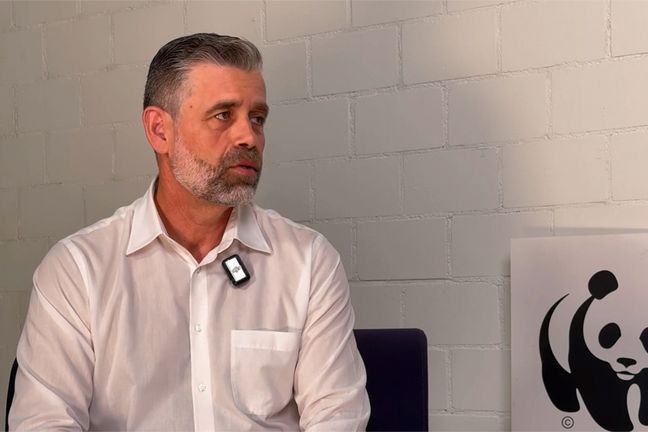
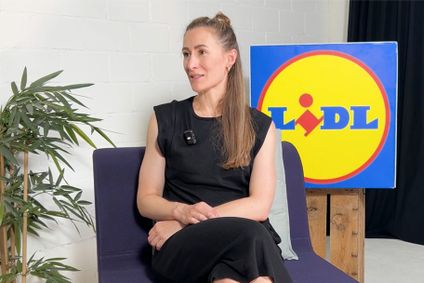
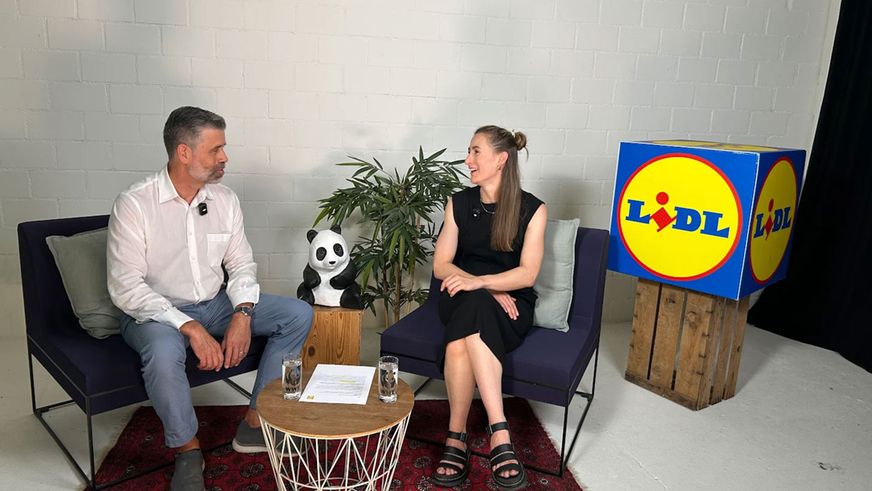
Climate change and biodiversity loss are among the greatest challenges of our time – and can only be overcome together. This is why WWF and Lidl entered into a partnership in 2024. What drives this collaboration? And what difference can it make for nature, supply chains, and consumers? Susanne Keil, Senior Consultant Quality & Sustainability at Lidl International, and Christian Som, Senior Manager Sustainable Markets at WWF Switzerland, provide the answers.
Susanne Keil: For us, it is clear that we can only tackle the challenges that affect us all – such as climate change, loss of species, and water scarcity – through strong alliances. The foundation is our Lidl sustainability strategy, which we have been pursuing for several years and are continuously developing. Working together with one of the world's largest environmental organizations gives us the opportunity to address the risks of our time in a focused manner.
Christian Som: As an environmental organization, we advocate for the collective prosperity of people and the environment. This also includes questions of supply and food security – particularly because food production has a significant impact on biodiversity and water consumption. For us, it was therefore crucial to work with a strong partner who is willing to tackle these problems and has the capabilities to solve them.
"Climate change, loss of species, and water scarcity can only be tackled through strong alliances. Working together with one of the world's largest environmental organizations gives us the opportunity to address these central risks in a focused manner."
Christian Som: We regularly exchange views on strategic issues. In doing so, we also hold up a mirror to each other – if we feel that something should be done differently or if we see new, future-proof solutions. In addition, we work together concretely on a technical level, meaning our experts exchange ideas regularly. We provide tools that Lidl can use to analyze the supply chain and identify high-risk regions. And we look for joint solutions on how problems can be addressed locally.
Susanne Keil: Our strategies and goals are repeatedly and critically questioned from a different perspective. Furthermore, WWF has a large network of experts in the production countries – there is a close exchange here. We can also use WWF tools, such as the WWF Risk Filter, when further developing our biodiversity strategy. The tool helps us to identify specific risk areas and define targeted measures.
Susanne Keil: Our partnership is broadly based. We are working on both strategic goals and specific raw material targets, particularly regarding sustainable sourcing. We want to further develop our sustainability strategy together with WWF and continuously scrutinize it. One example is our Conscious Nutrition strategy. Here, we use a WWF methodology to transparently demonstrate how we are moving towards the Planetary Health Diet.
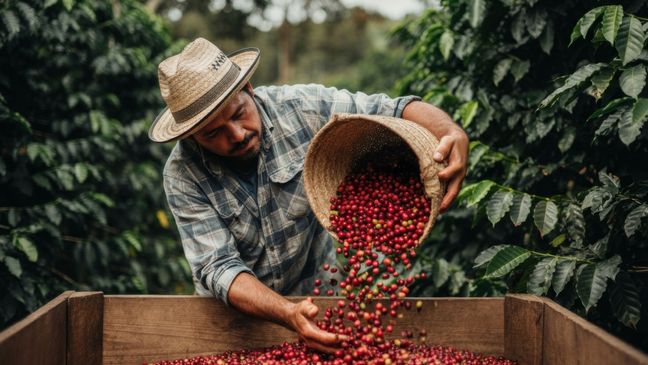
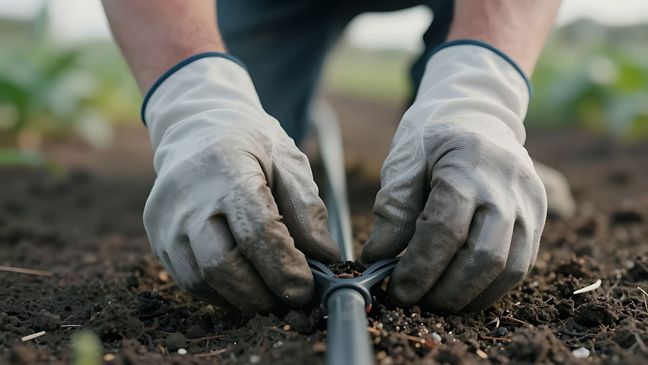
Christian Som: The biggest driver of biodiversity loss is agricultural production. Deforestation, high water consumption, soil compaction, and the use of pesticides threaten biodiversity in the long term. That is why it is so important for us to work with a strong partner who has an influence on how local production takes place – and who can work with us towards a smaller ecological footprint. At the same time, we must address consumption. This means: moving away from animal-based production. The production of meat and dairy products is particularly resource-intensive. That is why we are glad that Lidl is aligning itself so strongly with the Planetary Health Diet.
"Lidl, with its large customer base, has enormous potential to spread messages widely. If we succeed in raising consumer awareness with joint messaging, we have a massive lever."
Susanne Keil: At Lidl, sustainability is part of our DNA. We integrate it into all areas. It’s not just about methods, but also about the people behind them and how we can inspire them. We invest a lot of time and energy into this. Our internal sustainability initiative, YOU, aims to involve all employees so that they know what we are doing, what impact it has, and what they can do themselves. Ideally, this creates a multiplier effect by motivating each other to make more sustainable purchasing decisions.
Christian Som: Lidl, with its large customer base, has enormous potential to spread messages widely. If we succeed in raising consumer awareness together, we have a massive lever.
Christian Som: When one of the largest food retailers and one of the largest environmental organizations work together, it has enormous potential. If we use this potential together and ensure that production conditions improve for the benefit of people and nature, we have achieved a great deal.
Susanne Keil: For me, this partnership is a project very close to my heart because it represents the most effective sustainability collaboration I can imagine. Together, we can bring about change, involve people, and thus create impact.